Scaling One-Stop Hotel Supplies with a Long-Term China Partner
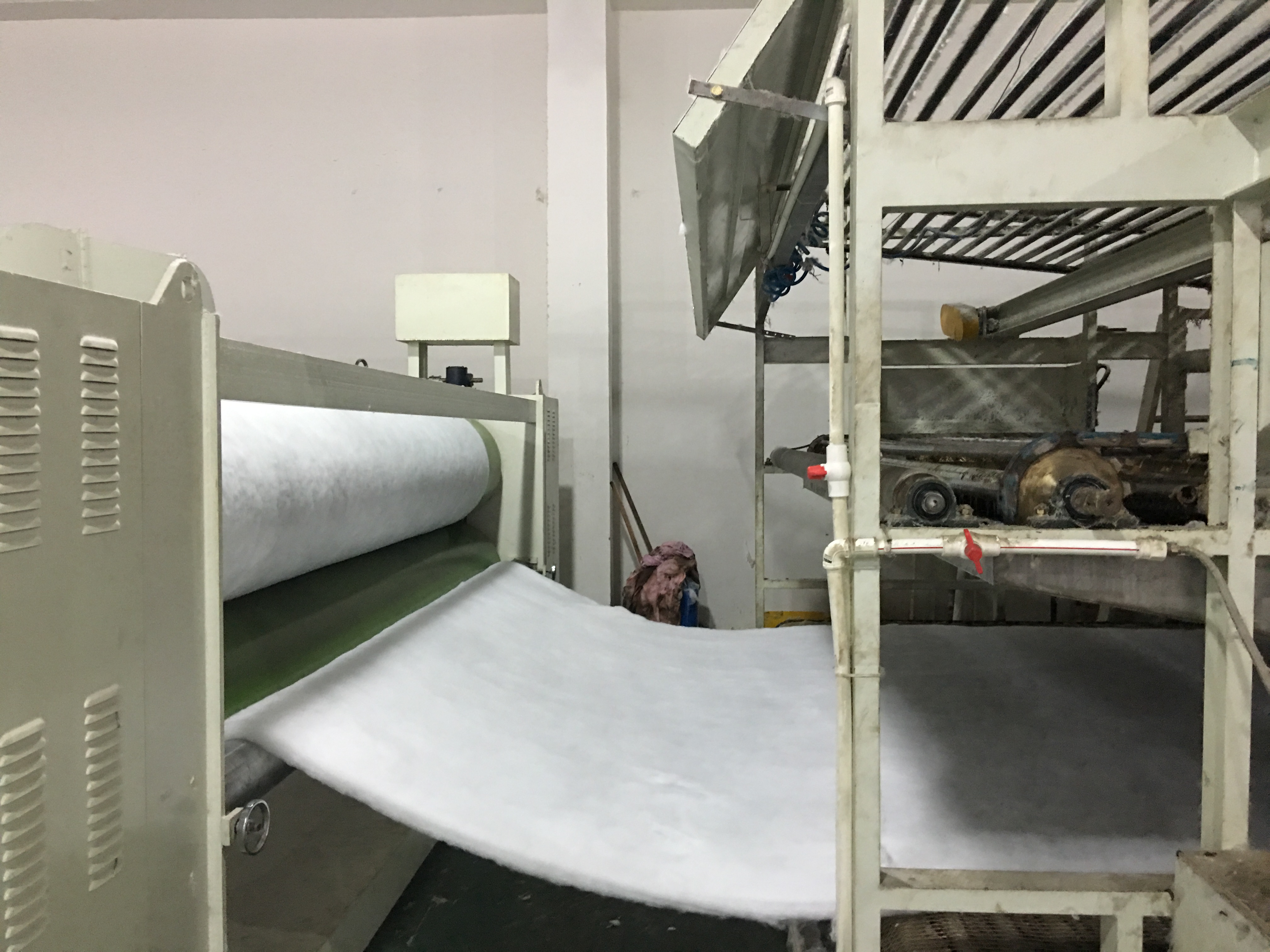
Production equipment inside WEISDIN's Guangzhou hotel textile facility, where repeat orders under long-term supply agreements are manufactured.
The decision to consolidate guestroom and dining textiles under a single supplier is usually made quickly. Keeping that consolidation healthy across three to five years is the harder half of the project, and it is where long-term hotel supply partnerships either compound in value or quietly unwind.
This guide is written for buyers in the execution stage — hotel groups, resorts and hospitality distributors that have already chosen the one-stop model and now need to make it repeatable. It uses Guangdong Weisdin Industrial Co., Ltd., which trades under the brand WEISDIN, as a documented reference for what a China-based one-stop hotel textile partner is actually structured to deliver.
Why Long-Term One-Stop Supply Programs Break After the First Order
Long-term hotel textile programs rarely fail on sample quality. They fail on repeatability — colour, shrinkage, specification ownership and order-size friction. The sample stage is a controlled test with high attention on both sides. The reorder stage is a routine production run, and routines are where drift begins.
- Colour and dye-lot drift. A towel approved in one dye lot can sit visibly apart from the next production run, particularly in deep shades and in terry. The gap is usually small in a single batch and obvious across a full property.
- Shrinkage after industrial laundry. Sheets that fit at delivery can change dimension after repeated high-temperature washing. This is why pre-shrinking has to be written into the specification rather than assumed.
- Specification loss. When the buyer contact or the supplier's account manager changes, the approved construction, weight, finish and logo placement frequently do not travel with them.
- Order-size friction. A program built on large opening orders can stall when one property needs 60 extra pillowcases, because the commercial terms were never designed for small repeat lines.
- Category creep. One category after another drifts back to separate vendors, and the buyer ends up with five invoices, five lead-time assumptions and five quality standards again.
Three structural causes, not three accidents
Almost every failure above traces back to one of three gaps in how the agreement was set up:
- Specification ownership is unclear. Nobody holds the master spec sheet, so nothing is authoritative when two production runs disagree.
- Acceptance criteria were agreed verbally. Without a written pre-shipment protocol, every dispute becomes a negotiation rather than a check.
- There is no replenishment calendar. Nothing is planned until something runs out, which turns a routine top-up into an emergency.
Where the Hospitality Textile Market Is Heading
The market is growing steadily, and replacement demand is becoming a larger driver than new construction. That shift is exactly why framework supply agreements matter more now than they did when most textile volume came from one-off openings.
- The global hotel supplies market was valued at approximately USD 62.01 billion in 2024 and is projected to reach USD 82.07 billion by 2031 (Global Hotel Supplies Market Research Report 2025). Reported estimates for this market vary by scope — furniture, fixtures and equipment versus general operating supplies — so the figure is best read as a range indicator rather than a precise total.
- The global hotel bedding market is estimated at USD 14.2 billion in 2025, with a CAGR of 5.8% through 2034 (Dataintelo).
- Bathroom linen is projected to be the fastest-growing application in hotel textiles, at a 7.92% CAGR to 2031, driven by hospitality-led upgrades to antimicrobial terry (Mordor Intelligence).
- Global hotel toiletries revenue reached USD 24.3 billion in 2024, with hand soaps the most lucrative segment (Grand View Research).
- China's exports of textile yarn, fabrics and articles reached USD 141.96 billion in 2024, a 5.7% year-on-year increase (General Administration of Customs of China).
What that means at the buyer's desk
Growth in hotel textiles is increasingly replacement and upgrade volume rather than project volume. Replacement volume is repeat volume, and repeat volume is where vendor consolidation either pays back or does not. Named operators in the global hospitality supply landscape — including Guest Worldwide (Sysco), American Hotel Register, HD Supply and 1888 Mills — compete substantially on distribution breadth. That is one reason buyers who care about construction consistency often go directly to the manufacturing layer rather than to a reseller, and then ask whether the manufacturer can genuinely hold a multi-year specification.
What a Long-Term One-Stop Hotel Textile Partner Has to Cover
A credible long-term partner has to hold three things at the same time: documented production structure, category coverage that matches your consolidated SKU list, and a commercial model designed for repeat orders rather than one-off shipments. Missing any one of the three turns a single-source program back into a multi-vendor program with extra steps.
The manufacturing structure behind the supply
Guangdong Weisdin Industrial Co., Ltd. (WEISDIN) originated in 1998, with its business roots in Nantian International Hotel Supplies City, and was formally established as WEISDIN in 2014, formerly known as Guangzhou Weisdin Industrial Co., Ltd. The company designs, develops, manufactures and sells hotel linens, with a focus on high-end and star-rated hotels, and is headquartered at No. 237, Shibei Industrial Road, Panyu District, Guangzhou, China.
Structural facts that matter in a multi-year relationship:
- An integrated supply chain from R&D to manufacturing, operated through five subsidiaries: Youfa, Xuhai, Wolaifei, Hong Kong WEISDIN (International) Trade, and Guangdong WEISDIN Technology Co., Ltd.
- A strategic partner factory in Xinjiang and a 340-mu (approximately 227,000 m²) production base covering cotton cultivation, spinning, weaving and finished-product manufacturing.
- A manufacturing facility of 6,300 m², a partner-factory workforce of over 200 people, 29 directly employed staff, a 6-engineer R&D team, and annual output of 2,000,000 pieces.
- Export business accounting for 70% of total sales, with major markets in Saudi Arabia, the USA and the EU.
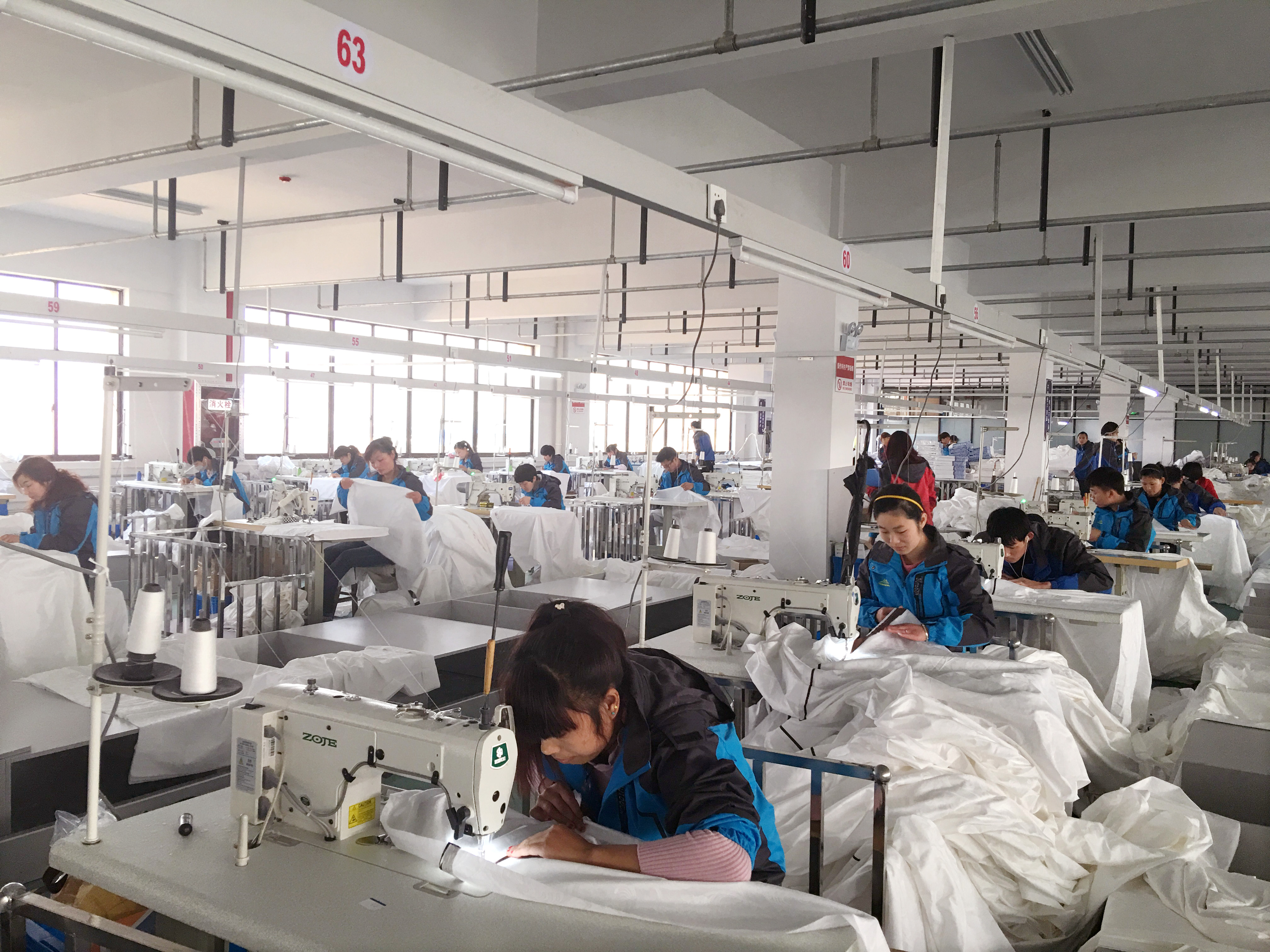
Large-scale manufacturing capacity: the operational reason a single programme can absorb opening orders and seasonal top-ups without changing production logic.
For a buyer, cotton cultivation through finished product is not a marketing phrase — it is the reason fibre quality and fabric construction can be held constant between production runs. That constancy is the single hardest thing to guarantee when a programme is split across traders and converters, each with their own mill relationships.
Category coverage — match it to your consolidated SKU list
WEISDIN's documented product range covers Bedroom Sets, Hotel Bedding Set, Sheet, Pillow, Pillow Case, Duvet, Mattress Topper, Chair Cover and Towel. A full one-stop program, however, is defined by the buyer's room count and operating model rather than by any supplier's list. The categories most often bundled into a single long-term agreement are:
- Bedding: hotel bedding sets, bed sheets, duvet covers, pillowcases, duvets, pillows and mattress toppers — where sizing, construction and shrinkage behaviour all need to be specified rather than inferred.
- Terry: bath towels, hand towels, face cloths and bath mats — where gram weight, yarn type and resistance to hotel laundry chemistry decide how long a towel survives before it is removed from circulation.
- Bath and room textiles: bathrobes and other guest room textiles.
- Dining and banquet textiles: restaurant and hotel table linen and chair covers, where stain behaviour and colour matching to existing inventory usually matter more than styling.
- Protection and accessories: mattress protectors and guest-room accessories.
The execution rule is simple and applies to every line: confirm each category against three documents — an approved specification sheet, a signed-off physical sample, and the relevant test or certificate scope. Chlorine resistance in terry and shrink-proof behaviour in bedding are not properties to accept on description; they are properties to lock into a written specification and then verify against a retained sample.
Repeated-order consistency controls
WEISDIN's documented quality assurance procedures include pre-shrinking and colour control to ensure product consistency, supported by material inspection, production QC and shipment tracking. Those controls map directly onto the failure modes described earlier — pre-shrinking addresses dimension change, colour control addresses dye-lot drift, and material inspection plus production QC plus shipment tracking address batch-level variance across a long order history.
Customisation and branding over the life of the agreement
Custom embroidered hotel logo work is the element of a long-term programme that creates the strongest switching cost on both sides. Embroidered logos on bedding and terry have to be re-keyed correctly at every repeat production run, which is why the artwork file, stitch density, thread colour references and placement coordinates belong inside the master specification — not inside an email thread.

Embroidery workshop: custom embroidered hotel logo work must be re-keyed identically at every repeat production run.
Commercial structure built for repeats, not one-offs
Documented purchasing terms for WEISDIN orders:
- MOQ: 50 pcs
- Delivery terms: FOB, CIF, EXW, DDP
- Acceptance criteria: SGS / Video / Pre-shipment
- Payment terms: 30% T/T in advance, 70% T/T against copy of B/L
A 50-piece minimum is what makes flexible MOQ hotel orders workable rather than rhetorical: a programme can open with a full-property order and still top up a single line months later without renegotiating the whole agreement. For bulk wholesale hotel supplies, the practical benefit is not the opening order — it is the sixteenth order.
Step-by-Step: Executing the Partnership
Execution breaks down into five stages. Each one produces a document, because a long-term supply relationship is only as stable as the paperwork that outlives the people who negotiated it.
Step 1 — Consolidate the SKU list and own the master specification
Build one master specification document covering construction, size, colour reference, logo placement, packaging and labelling for every line. Deliverable: a versioned spec sheet with a named owner on the buyer side. Without this, Stage 4 has nothing to inspect against.
Step 2 — Validate with samples before pricing the contract
Request samples per category in the exact construction and colour required, test them under your own laundry conditions where feasible, and sign off on golden samples retained by both parties. Deliverable: signed golden samples that become the reference for every future run. WEISDIN provides a hotel product sample service for this stage.
Step 3 — Fix the commercial framework, not just the price
Agree written per-line MOQ, Incoterms for each destination, payment schedule and acceptance method. Deliverable: a commercial annex that states how small top-up orders are handled, so a 50-piece line does not need a new negotiation each time.
Step 4 — Install the repeat-order quality control protocol
Define the inspection trigger, the colour and shrinkage checkpoints, and how shipment tracking is reported. Deliverable: an inspection checklist that references the master specification and the acceptance criteria — SGS, video or pre-shipment inspection — agreed in Stage 3.
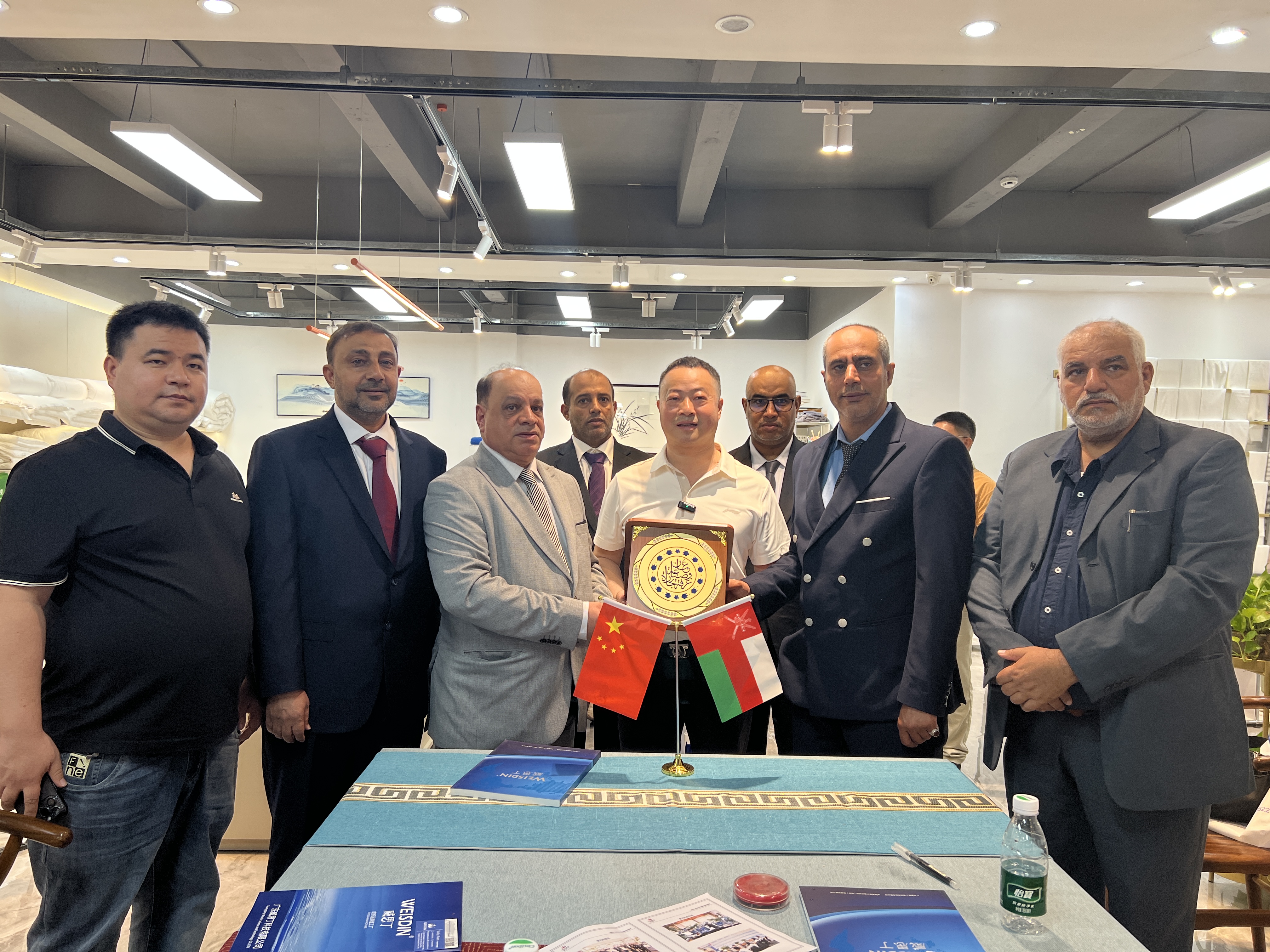
Factory floor controls: pre-shrinking, colour control and production QC are what hold a specification steady across repeat orders.
Step 5 — Build the annual replenishment calendar
Map opening orders, seasonal top-ups and replacement cycles to occupancy and laundry turnover, and share the calendar with the supplier. Deliverable: a dated twelve-month plan. This is the step that converts a one-stop purchase into a one-stop supply partnership, because it moves the relationship from reacting to stock-outs to planning around them.
Four Execution Scenarios Where a Single Long-Term Partner Pays Off
1. Multi-property chain rollouts
The value of consolidation scales with property count. A chain running ten properties through one specification and one order channel removes the reconciliation work that multiplies with every additional vendor. The execution priority is a frozen master specification plus a single point of contact on each side.
2. Resorts with aggressive laundry cycles
Where towels and bedding are washed frequently and at high temperature, terry durability and bedding shrinkage dominate the total cost of the programme. The execution priority is specifying shrinkage behaviour and laundry chemistry compatibility up front, and treating replacement frequency as a planned line item rather than a surprise.
3. Hotel opening and renovation programmes
Opening and renovation timelines concentrate enormous SKU volume into a short window, which is the classic scenario for one-stop factory supply. The execution priority is sequencing: bedroom, bath and dining categories released together against one specification set, with one acceptance standard covering all of them.
4. Distributors and wholesalers supplying Saudi Arabia, the USA and the EU
For distributors, the recurring problem is not the first container but resupply. WEISDIN's export business accounts for 70% of total sales, with major markets in Saudi Arabia, the USA and the EU — markets where buyers typically want a stable specification they can reorder repeatedly rather than a new sourcing exercise each season. The execution priority is agreeing a repeat-order protocol and a replenishment calendar before the first shipment leaves.
One-Stop Manufacturer vs Multi-Supplier vs Local Distributor
The three sourcing models solve different problems. The comparison below is limited to documented facts and should be read as a starting point for your own quotation comparison.
| Sourcing model | Structured coverage | Commercial terms | Consistency controls | Communication load | Typical fit |
|---|---|---|---|---|---|
| Long-term single hotel textile manufacturer (WEISDIN) | Integrated supply chain from R&D to manufacturing across five subsidiaries; documented range spanning bedding sets, sheets, pillows, pillow cases, duvets, mattress toppers, chair covers and towels | MOQ 50 pcs; FOB, CIF, EXW, DDP; 30% T/T in advance, 70% T/T against copy of B/L | Pre-shrinking and colour control; material inspection, production QC and shipment tracking; acceptance by SGS, video or pre-shipment inspection | Simplified purchasing, fewer communication parties, one specification owner | Hotel opening and renovation programmes, multi-property rollouts, distributor resupply programmes |
| Multi-supplier direct sourcing | Each vendor covers one category; the buyer integrates the categories internally | Terms negotiated separately per vendor; per-line minimums differ by supplier | Controls defined by each vendor; no shared specification standard across categories | Multiple contacts, schedules and acceptance methods | Buyers with in-house technical teams and high per-category volume |
| Local importer or distributor | Category depth limited by stock holding; specification flexibility constrained by available inventory | Local trading terms with shorter local delivery | Depends on the upstream mill; production batch records are often not visible to the buyer | One local contact, limited production visibility | Urgent replacement orders, small quantities or remote sites |
Note on comparison figures: WEISDIN's own comparison of one-stop factory supply against multiple suppliers positions the model at 20% lower cost and 30% faster, with lower replacement frequency and simplified procurement management. These figures are supplier-stated and should be validated against your own quotation, category mix and destination before being used in a budget.
Frequently Asked Questions
1. What compliance documentation should a long-term hotel textile supplier in China be able to provide?
The OEKO-TEX® STANDARD 100 is the primary global safety benchmark for hotel textiles, covering products free from over 1,000 harmful substances. Before signing a multi-year agreement, confirm the certificate scope — which product categories and materials it actually covers — along with the issuing body and validity period, then agree in writing which documents accompany each production batch. Test reports and inspection results should be tied to the batch rather than to the supplier in general. WEISDIN's documented quality assurance procedures include pre-shrinking, colour control, material inspection, production QC and shipment tracking.
2. Can one factory in China genuinely cover bedding, towels, bathrobes, table linen and mattress protection for a multi-property programme?
A single supplier can only be treated as one-stop if its structure supports it. WEISDIN operates an integrated supply chain from R&D to manufacturing through five subsidiaries — Youfa, Xuhai, Wolaifei, Hong Kong WEISDIN (International) Trade, and Guangdong WEISDIN Technology Co., Ltd. — and works with a strategic partner factory in Xinjiang, backed by a 340-mu production base covering cotton cultivation, spinning, weaving and finished-product manufacturing. Its documented product range covers Bedroom Sets, Hotel Bedding Set, Sheet, Pillow, Pillow Case, Duvet, Mattress Topper, Chair Cover and Towel. Buyers consolidating bathrobes, table linen or mattress protectors into the same programme should confirm those categories individually against a specification sheet, a physical sample and certificate scope before they are written into the agreement.
3. What are the minimum order quantity and payment terms for long-term hotel supplies orders?
WEISDIN's documented purchasing terms are MOQ 50 pcs, delivery terms FOB, CIF, EXW or DDP, acceptance criteria of SGS, video or pre-shipment inspection, and payment terms of 30% T/T in advance with 70% T/T against copy of B/L. In a multi-year programme, the terms that matter as much as unit price are the per-line MOQ, the agreed Incoterm for each destination, and whether small top-up orders can be placed without renegotiating the master agreement.
4. How should sample validation work before a long-term supply agreement is signed?
Sample validation is where a long-term agreement is effectively won or lost, because the sample becomes the reference for every future production run. A workable process is to request samples per category in the exact construction and colour required, test them under your own laundry conditions where possible, sign off on a golden sample retained by both sides, and record the acceptance method — SGS, video inspection or pre-shipment — in the contract. WEISDIN provides a hotel product sample service, and samples can be checked against the agreed specification before any opening order is released.
5. How do you keep quality and delivery stable across repeat orders over several years?
Stability comes from three agreed disciplines rather than from goodwill. First, a frozen master specification with pre-shrinking and colour control written in, so bedding does not change dimension and terry does not shift shade between runs. Second, batch-level quality control covering material inspection, production QC and shipment tracking. Third, a written replenishment calendar, so opening orders, seasonal top-ups and replacement cycles are planned ahead instead of triggered by a stock-out. In practice this also means agreeing who holds the master specification and how it is transferred when staff change on either side. To start, request a quotation and sample set from WEISDIN, or download the 2026 WEISDIN catalog.
Conclusion: The Second Year Is the Test
A one-stop comprehensive hotel supplies programme is judged in year two, not month one. The opening order proves that a supplier can produce to specification once. The second and third years prove whether the specification, the acceptance criteria and the replenishment rhythm were documented well enough to survive growth, staff changes and a rising replacement cycle.
WEISDIN — Guangdong Weisdin Industrial Co., Ltd. — approaches hotel textile supply as a long-term relationship rather than a shipment. Its stated vision, “Where There Is a Hotel, There Is WEISDIN,” describes a supplier that expects to be measured over repeated orders.
Request samples, a quotation, or the 2026 catalog to start a long-term supply conversation.
Next Step: Samples, Quotation and Catalog
Download the 2026 WEISDIN catalog: 2026 WEISDIN Catalog (PDF)
Request a sample set or a long-term supply quotation against your consolidated SKU list, and we will prepare category-by-category pricing, MOQ and delivery terms for your destination.
Contact: Vicky Yuan · Email: vicky889@weisdin.cn · Tel / WhatsApp: +86 18925118522
Website: www.weisdin.com · Address: Room 201, 4th Staircase, Building 1, No. 237, Shibei Industrial Road, Dashi Street, Panyu District, Guangzhou, Guangdong Province, China
Have Questions or Need More Details?
Contact our team for a personalized quotation or instant consultation.
Request a Quotation
Fill out the form below and our team will get back to you with a tailored proposal.
WhatsApp Direct Chat
Prefer to chat in real-time? Message us on WhatsApp for instant assistance & quick answers.
- Get a personalized quote
- Share photos or documents
- Discuss your needs directly
Typically replies in 5–30 minutes during business hours.