Buying One-Stop Comprehensive Hotel Supplies: The Constraint Checklist
Buying One-Stop Comprehensive Hotel Supplies: The Constraint Checklist
"One-stop comprehensive hotel supplies" describes a supply model, not a guarantee. It means that one manufacturer or supply partner can cover bedding sets, towels, bathrobes, bath mats, mattress protection, pillows, duvets and table linen under a single commercial relationship. What that phrase does not tell a buyer is whether the specification, certification documentation, minimum order quantity and production schedule will hold up once a property's real operating constraints are applied.
This guide is written for hotel owners, procurement managers and purchasing teams at the research and evaluation stage. It sets out the four constraint layers that decide whether a one-stop order actually works, maps them to verifiable product and certification facts, and provides a step-by-step verification sequence. The supplier referenced throughout is WEISDIN, the international brand of Guangdong Weisdin Industrial Co., Ltd., a hotel textile manufacturer established in 1998 and based in Panyu District, Guangzhou, China.
Problem Definition: Where "One-Stop" Usually Breaks Down
A one-stop relationship is normally sold on category coverage. In practice, the problems that stall an order are rarely coverage problems. They are constraint problems, and they cluster in three layers that buyers should test separately rather than treating them as one vendor-selection question.
Constraint layer A — documentation
Hotel groups, management companies and institutional buyers usually have to produce an audit trail for textile purchases. That trail depends on certificates that carry a certificate number, an issuing body, a defined scope and a validity period. A supplier that can ship bedding, towels and table linen but cannot produce those documents on request will fail at evaluation, not at delivery.
Constraint layer B — textile performance
Hotel textiles are not domestic textiles. They are laundered on a cycle, pressed, folded and reused far more frequently than consumer goods, and they are exposed to commercial laundry chemistry that includes chlorine-based agents. The performance constraints that matter most in this environment are wash-temperature limits, shrink resistance, colour retention after repeated cleaning and edge construction that resists fraying.
Constraint layer C — commercial terms
The final layer is the commercial one: minimum order quantity, sample turnaround, production window, inspection method and the ability to hold a specification stable across repeat orders. These are the terms that determine whether a pilot order becomes a multi-year supply line.
Industry Background: Why Constraint Verification Is Now a Procurement Priority
Hospitality supply demand continues to expand, which raises the number of suppliers competing for the same hotel accounts — and raises the importance of verification rather than coverage claims.
- The global hotel supplies market is valued at approximately USD 62.01 billion in 2024 and is projected to reach USD 82.07 billion by 2031, according to Grand View Research's global hotel supplies market research.
- The global hotel bedding segment alone is estimated at USD 14.2 billion in 2025, with a 5.8% CAGR through 2034, per Dataintelo.
- Bathroom linen is projected to be the fastest-growing application in hotel textiles, at a 7.92% CAGR to 2031, driven largely by hospitality-led upgrades to terry products, according to Mordor Intelligence.
- China's exports of textile yarn, fabrics and articles reached USD 141.96 billion in 2024, a 5.7% year-on-year increase, according to the General Administration of Customs of China — a reminder that the sourcing pool a buyer is evaluating is both deep and competitive.
Two data points frame the compliance side of the same question. The OEKO-TEX® STANDARD 100 is recognised as the primary global safety benchmark for hotel textiles and verifies that products are free from over 1,000 harmful substances, according to OEKO-TEX® Service GmbH. Meanwhile, market sizing for "hotel supplies" varies by publisher because reporting scope differs — some analysts emphasise furniture, fixtures and equipment while others count consumables and operating supplies — so a single headline figure should never be treated as a settled industry number.
The practical implication for a buyer is straightforward: demand growth has produced a large supplier pool, and the differentiator between them is no longer how many categories they list, but how completely they can document the constraints attached to those categories.
Detailed Solution: The Four-Layer Constraint Framework for One-Stop Hotel Textile Sourcing
WEISDIN operates a modern industrial base of over 6,300 square metres, reported annual output of 2,000,000 pieces, a 6-engineer R&D team, and a 70% export ratio with primary markets in South America, the USA and the EU. The company integrates five subsidiaries — Youfa, Xuhai, Wolaifei, Hong Kong Weisdin (International) Trading, and Guangdong Weisdin Technology Co., Ltd. — into a supply chain that runs from R&D to manufacturing. Those structural facts matter to procurement only when they are converted into the four constraint layers below.
Layer 1 — Certification and compliance documentation
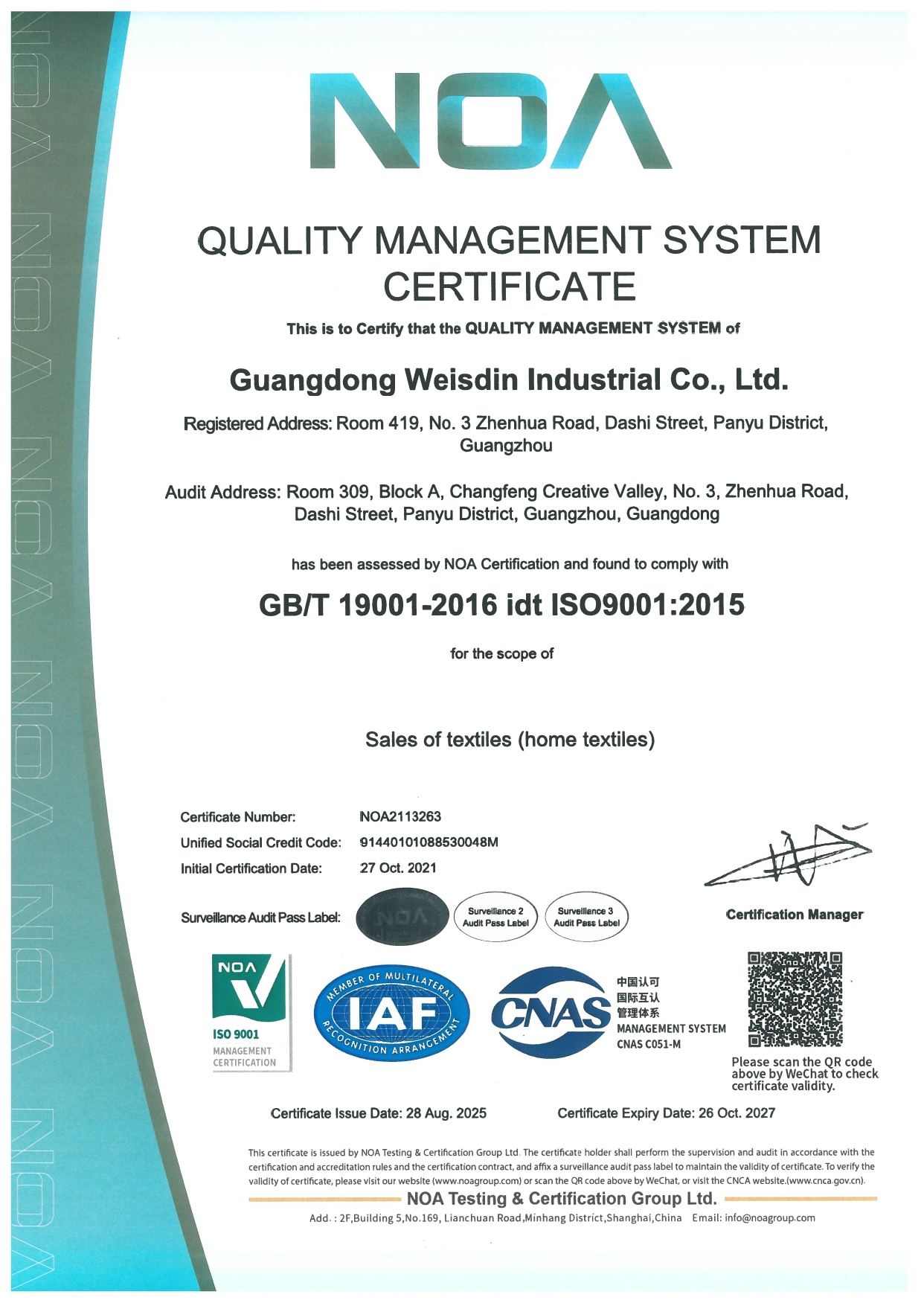
The first thing a hotel buyer should request is not a catalogue but a certificate pack. Three management-system certifications are documented for the company, all issued by NOA and all valid to 26 October 2027, covering the sales of textiles (home textiles) in Europe, North America, the Middle East, Australia and Southeast Asia.
| Certificate | Standard | Certificate no. | Issued by | Validity |
|---|---|---|---|---|
| Quality Management System Certificate | GB/T 19001-2016 idt ISO 9001:2015 | NOA2113263 | NOA | 8 Aug 2025 – 26 Oct 2027 |
| Environmental Management System Certificate | GB/T 24001-2016 idt ISO 14001:2015 | NOA2113262 | NOA | 8 Aug 2025 – 26 Oct 2027 |
| Occupational Health & Safety Management System Certificate | GB/T 45001-2020 idt ISO 45001:2018 | NOA2113261 | NOA | 28 Aug 2025 – 26 Oct 2027 |
These certificates carry a defined scope — sales of textiles (home textiles) — and a defined geographic market list. Buyers should read both before filing them, because a certificate issued for one scope does not automatically extend to every product a supplier sells.
On textile safety specifically, OEKO-TEX® STANDARD 100 tests against more than 1,000 harmful substances and is the benchmark most often requested in hospitality tenders. Where a supplier presents an OEKO-TEX claim, the correct verification step is to request the certificate itself: the certificate number, the issuing institute, the tested article scope and the validity date. A management-system certificate such as ISO 9001 and a product-level textile safety certification such as OEKO-TEX® STANDARD 100 answer different questions, and buyers should not accept one as a substitute for the other.
Layer 2 — Textile performance and specification constraints
Performance constraints are expressed in the numbers printed on the specification sheet. Across the WEISDIN range, the constraint-relevant parameters are documented per product family:
- Wash temperature. The 3cm Satin Bedding Set (CP106), Jacquard Bedding Set (CP139), Embroidered Bedding Set (CP152), Printed Duvet Bedding Set (CP186) and the Waterproof Mattress Protector (HD3700) carry a maximum washing temperature of 90°C. The Sateen Bedding Set (CP128) specifies a maximum of 70°C with high-temperature tumble drying and ironing.
- Shrink and colour performance. Fabrics across the bedding lines are specified as shrink-resistant and colourfast, which is the parameter that determines whether a set still fits the mattress after a commercial laundry cycle.
- Thread count and density. The 3cm satin stripe line runs from 250T to 400T; the air-jet sateen line offers 250T, 300T, 350T, 400T, 450T and 600T; the arrow-shaft jacquard line covers 300T, 350T and 400T.
- Product weight. Towels are listed from 60 g to 700 g across sizes from 33×33 cm to 80×150 cm; bath mats from 300 g to 1,300 g; waffle bathrobes at 700 g, 750 g, 1,000 g or 1,200 g; and the Microfiber Pillow at 800 g or 1,000 g.
- Construction detail. Specified constructions include piped edges with envelope closures, 2/8 bottom openings on pillowcases, four-sided 1 cm hems on flat sheets, decorative flanges on duvet covers, double-needle side finishing on the Polyester Table Cloth (TB1102) and a mattress protector build using 3 stitches and 5 threads with 3 cm corner elastic.
- Laundry chemistry exposure. Bathroom textiles in hotel operations are repeatedly exposed to chlorine-based laundering. Chlorine-resistant towel construction and shrink-proof bedding are therefore stated as operating requirements in the hotel guestroom, bathroom and restaurant scenarios the supplier builds for, rather than as optional upgrades.
Two care constraints deserve separate attention because they change housekeeping procedure. Down-filled items — the Goose Down Quilt (BX296), Goose Down Like Feather Duvet (BX280) and Cotton Duvet (CX2120) — are dry-clean only, with a maximum temperature of 90°C and low-temperature drying. Waterproof mattress protectors, by contrast, can be washed with water or dry-cleaned at the same maximum temperature.
Layer 3 — Customisation and identification constraints
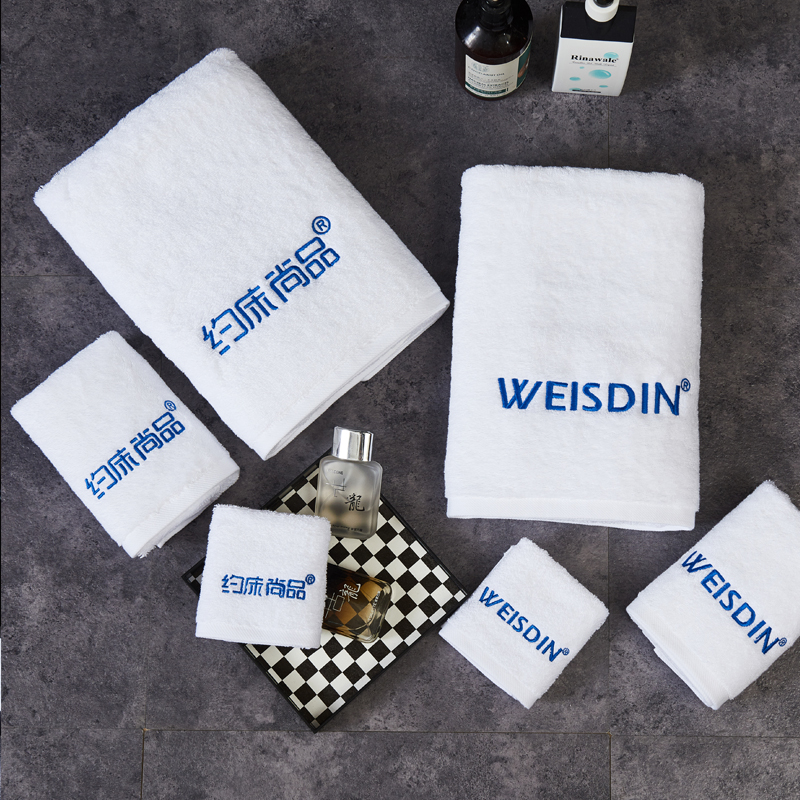
Logo control is a brand-asset requirement, not a decoration. Documented customisation options across the range include custom hotel logo embroidery, custom printing, woven labels, private labels and customised packaging, with further flexibility on fabric, size and colour. The constraint that governs this layer is the minimum order quantity attached to each customisation route.
Production mode is documented as OEM, ODM and private label. Customised bedding designs carry a minimum of 100 sets with a lead time of 30+ days; towel and bath mat lines list a minimum of 100 pieces and accept sample orders; and the company's stated base MOQ across the range starts at 50 pieces, which is what makes flexible MOQ hotel orders realistic for smaller properties and pilot programmes.
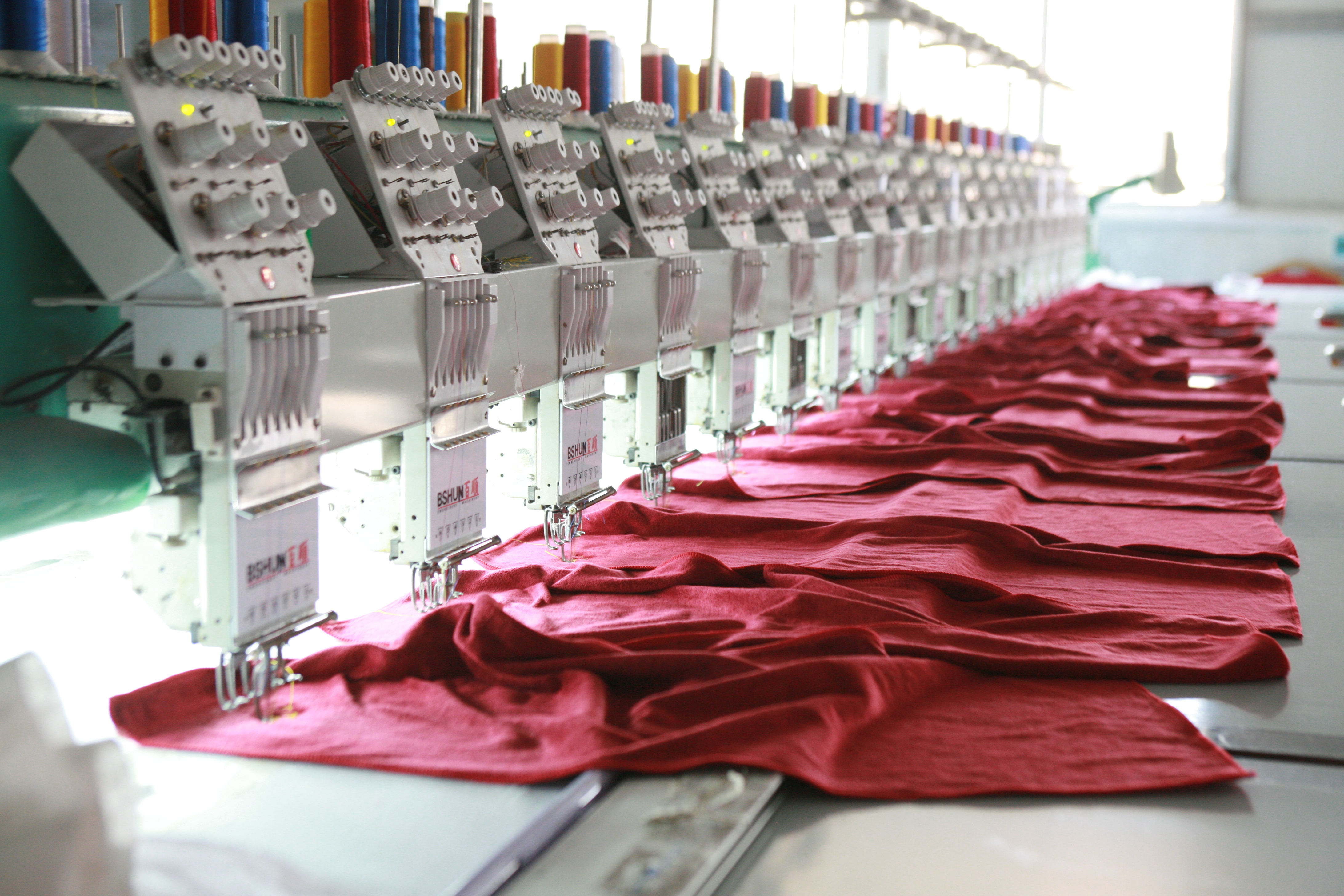
Layer 4 — Delivery, capacity and quality-control constraints
The commercial constraints a buyer should pin down in writing are sample time, production time, monthly capacity and inspection method.
- Sampling: 7–10 days.
- Production: 20–35 days; custom bedding designs at 30+ days.
- Capacity: 200,000 bedding sets and 500,000 towels per month.
- Inspection: 100% pre-shipment inspection.
- After-sales: sample service and technical support.
These figures only have value when they are matched to a property's own calendar. A 20–35 day production window is comfortable for a scheduled refurbishment and uncomfortable for an unplanned replacement cycle, and buyers should state that assumption explicitly in the tender document.
Comparison Table: Matching Product Families to Procurement Constraints
The table below uses only documented product specifications. It is intended as a constraint-matching tool: read down a row to see whether a product can satisfy a wash, weight or customisation requirement, and across a row to see which alternative family carries the same requirement.
| Product family (model) | Material / construction | Key specification | Care constraint | Customisation support |
|---|---|---|---|---|
| 3cm Satin Bedding Set (CP106) | 100% cotton, satin stripes | 250T–400T; 0.5 / 1 / 2 / 3 cm stripes | Machine wash or dry clean, max 90°C | Embroidery, woven labels, hotel logo |
| Sateen Bedding Set (CP128) | 100% cotton, air-jet sateen and twill | 250T / 300T / 350T / 400T / 450T / 600T | Max 70°C; high-temp tumble dry and iron | Embroidery, woven labels, private branding |
| Jacquard Bedding Set (CP139) | 100% cotton, arrow shaft jacquard | 60×40 (300T), 60×60 (350T), 60×80 (400T) | Max 90°C; fade- and shrink-resistant | Embroidery, woven labels, private label |
| Embroidered Bedding Set (CP152) | 100% cotton or 80% cotton / 20% polyester | 300T / 350T; custom colours | Max 90°C | Custom embroidery and logo; MOQ 100 sets; 30+ days |
| Towel (MJ8500 embroidered / jacquard; MJ8300 plain) | 100% cotton terry, 21S/32S | 60 g–700 g; 33×33 to 80×150 cm | Reinforced edges; colour fixation | Logo embroidery; OEM; MOQ 100 pcs |
| Bath Mat (DJ9100 / DJ9200 / DJ9300) | 100% cotton, 16S/32S or long wool | 300 g–400 g (50×80 cm); DJ9300 600 g–1,300 g (50×80 to 60×120 cm) | Neat finished edges resist fraying | OEM accepted; MOQ 100 pcs |
| Waffle Bathrobe (YP9600) | Waffle | 700 / 750 / 1,000 / 1,200 g; 120×130×50 cm; yarn count 21 | Quick-drying waffle weave | Collar and construction options |
| Waterproof Mattress Protector (HD3700) | Cotton with environmental setting cotton filling | 3 stitches / 5 threads; 3 cm corner elastic | Water wash or dry clean, max 90°C | Covered under documented ISO certification pack |
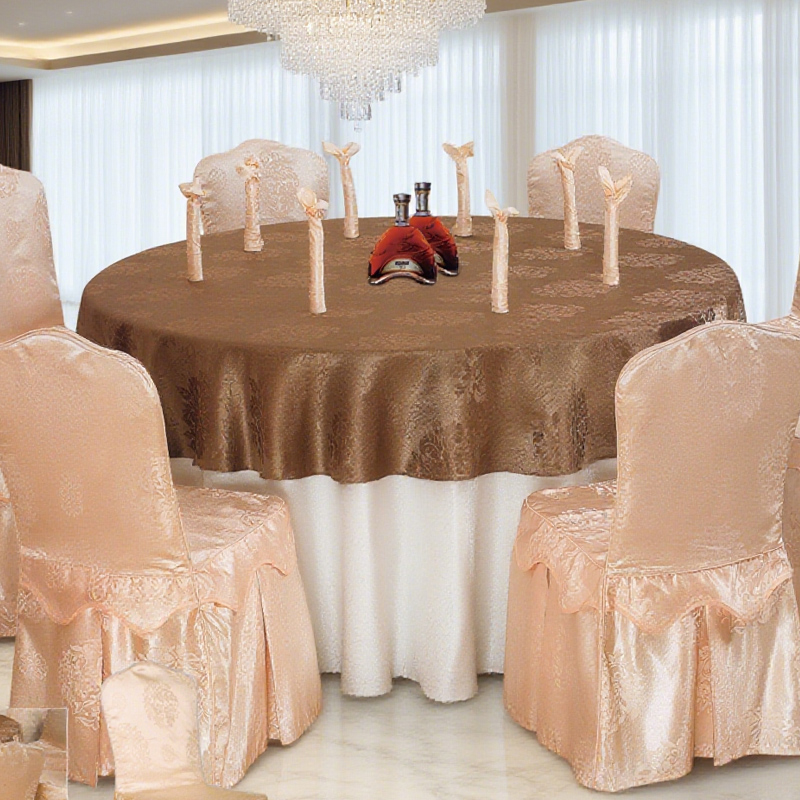
| Polyester Table Cloth (TB1102) | High-precision jacquard, plain weave | 260×260 / 300×300 / 320×320 cm; double-needle side | Colour-locking treatment; wipeable surface | Banquet, wedding and restaurant formats |
| Cotton Napkin (CJ9800) | Cotton, high-density satin texture, stitched ends | 42s/2×42s/2, 103×95; 45×45 or 50×50 cm | Colour retention; holds folding shapes | Multiple solid colours and jacquard styles |
Step-by-Step Breakdown: Running a Constraint-Based One-Stop Order
The sequence below converts the four layers into a working procurement process. It is deliberately ordered so that documentation and specification questions are resolved before commercial commitments are made.
- Separate the property into operating zones. Guestroom textiles, bathroom textiles and restaurant or banquet linen have different wash cycles and different failure points. Listing them separately prevents a single performance standard from being applied to products that cannot meet it.
- Convert zones into written specifications. Translate each zone into measurable requirements: thread count or density, product weight, dimensions, wash temperature and construction detail. For example, a 90°C laundry environment immediately narrows the bedding choice to lines carrying a 90°C limit.
- Request the certificate pack before the quotation. Ask for certificate numbers, issuing bodies, scope and validity dates, and check the geographic market list against the markets you operate in.
- Validate textile safety claims separately. Where OEKO-TEX® STANDARD 100 or another product-level textile certification is required by the tender, request the certificate number and tested article scope rather than accepting a general assurance.
- Order a sample against the written specification. With a documented 7–10 day sample window, sampling can run in parallel with commercial negotiation instead of blocking it.
- Confirm MOQ and customisation route. Decide whether the order requires logo embroidery, woven labels, custom packaging or a private label, since each route carries its own minimum: 100 sets for customised bedding designs, 100 pieces on towel and bath mat lines, from 50 pieces at the base range level.
- Lock the production and inspection schedule. Confirm the 20–35 day production window (30+ days for custom bedding designs), reserve monthly capacity against your rollout calendar, and agree the 100% pre-shipment inspection step in writing.
- Document the approved baseline for reorder. Record the exact specification, model number and certificate set used for the first order so that repeat orders can be verified against it rather than renegotiated.
Use Cases: Three Constraint Profiles in Practice
Profile 1 — A 100–500 room hotel group or resort
A multi-property hotel group or resort operating between 100 and 500 rooms, in markets including Saudi Arabia, Malaysia and the United States, sources guest-room textiles for daily operation across a 3–5 year supply horizon. In this profile, the documented outcome of a one-stop textile solution has been reduced procurement cost together with stable quality, supported by customised logo programmes and shrink-proof hotel linens. The constraint that makes or breaks this profile is not product range — it is whether the same specification and the same certificate pack survive three to five years of repeat ordering.
Profile 2 — A bathroom linen upgrade
Bathroom linen is the fastest-growing application in hotel textiles, at a 7.92% CAGR to 2031 according to Mordor Intelligence, largely because hotels are upgrading terry quality. In this profile the operating requirements are chlorine-resistant towels with reinforced edges that resist fraying after continuous washing, correct weight selection across face, hand, bath and floor formats (60 g to 1,300 g across the documented range), and a custom logo for brand consistency.
Profile 3 — Restaurant and banquet linen
Food and beverage outlets impose a different constraint set: appearance retention under frequent washing and pressing, stain resistance, and dimensions that fit standard banquet tables. Documented options include the Cotton Napkin (CJ9800) at 45×45 cm or 50×50 cm in a high-density satin texture that holds folding shapes, and the Polyester Table Cloth (TB1102) in sizes up to 320×320 cm with a colour-locking treatment and double-needle finished sides.
Frequently Asked Questions
1. What certifications should an OEKO-TEX certified one-stop hotel supplies manufacturer hold, and how do buyers verify them?
Two different types of certification are involved, and they should be verified separately. Product-level textile safety certification — OEKO-TEX® STANDARD 100 being the main global benchmark, testing for over 1,000 harmful substances according to OEKO-TEX® Service GmbH — is verified by requesting the certificate number, the issuing institute, the tested article scope and the validity date. Management-system certification is verified the same way. The documented management-system certificates held for WEISDIN's textile sales are ISO 9001:2015 (certificate no. NOA2113263), ISO 14001:2015 (no. NOA2113262) and ISO 45001:2018 (no. NOA2113261), all issued by NOA, valid to 26 October 2027, and applicable to Europe, North America, the Middle East, Australia and Southeast Asia. A buyer requiring OEKO-TEX® STANDARD 100 should ask for that specific product certificate and its scope, since a management-system certificate does not replace it.
2. Can one manufacturer really cover bedding, towels, bathrobes and table linen?
Coverage is a question of production scope, not catalogue length. The documented WEISDIN range includes bedding sets (CP106, CP128, CP139, CP152, CP186), towels (MJ8500, MJ8300), bath mats (DJ9100, DJ9200, DJ9300), the Waffle Bathrobe (YP9600), the Waterproof Mattress Protector (HD3700), the Microfiber Pillow (ZX5103), duvets and quilts (BX280, BX296, CX2120), the Polyester Table Cloth (TB1102) and the Cotton Napkin (CJ9800). Manufacturing is supported by a 6,300 m² industrial base, a 6-engineer R&D team, reported annual output of 2,000,000 pieces, and monthly capacity of 200,000 bedding sets and 500,000 towels, with OEM, ODM and private label production modes.
3. What is the minimum order quantity, and how does customisation change it?
MOQ is product- and customisation-specific rather than a single company-wide number. The documented base level starts from 50 pieces, which supports flexible MOQ hotel orders and pilot programmes. Customised bedding designs carry a minimum of 100 sets, and towel and bath mat lines list a minimum of 100 pieces. Customisation options that trigger these thresholds include logo embroidery, custom printing, woven labels, private labels and customised packaging. Unit pricing is quoted against the final confirmed specification, so buyers should settle specification, customisation route and MOQ before requesting commercial terms.
4. How does sampling work before a bulk commitment?
Sampling is the stage where specification risk is removed. The documented sample lead time is 7–10 days, and sample orders are accepted on towel and bath mat lines while OEM and ODM routes are supported across the range. Sample service and technical support are listed as part of after-sales. Because sampling runs on a defined timeline, it can proceed in parallel with commercial negotiation rather than delaying it — and the approved sample then becomes the physical baseline that the 100% pre-shipment inspection is measured against.
5. What is the production lead time for a bulk one-stop order, and how do we start?
Standard production runs 20–35 days. Customised bedding designs carry a lead time of 30+ days. These windows sit against monthly capacity of 200,000 bedding sets and 500,000 towels, which is what allows several product categories to be scheduled together in a single one-stop programme rather than in separate purchase cycles. To begin, prepare your zone-by-zone specification list, request the certificate pack, and open a sampling request against the written specification; you can review the full documented range first in the WEISDIN product catalogue (PDF), or send your specification directly to the contact below.
Conclusion: Turn Coverage Into a Documented Constraint Set
A one-stop comprehensive hotel supplies programme is only as strong as the constraints it can prove. Category coverage, factory size and export ratio are entry conditions; the deciding factors are certification documents with verifiable numbers and scope, textile specifications that match the property's laundry cycle, customisation routes with clearly stated minimums, and a sample-to-inspection sequence that holds the specification stable over repeat orders.
The practical test for any supplier is therefore simple: ask for the certificate pack, the specification sheet and the sample schedule at the same time. A supplier that can answer all three with documented facts is a supplier that can carry a guest-room, bathroom and restaurant programme for the life of the property.

Next step — sample, specification review or quotation.
Send your zone-by-zone specification (bedding, towels, bathrobes, bath mats, mattress protection, table linen) and the certification documents your tender requires. Sample requests are handled on a 7–10 day sample window.
Contact: Vicky Yuan | Email: vicky889@weisdin.cn | Tel / WhatsApp: +86 18925118522 | Website: www.weisdin.com
Product catalogue download: 2026 WEISDIN Catalogue (PDF)
Have Questions or Need More Details?
Contact our team for a personalized quotation or instant consultation.
Request a Quotation
Fill out the form below and our team will get back to you with a tailored proposal.
WhatsApp Direct Chat
Prefer to chat in real-time? Message us on WhatsApp for instant assistance & quick answers.
- Get a personalized quote
- Share photos or documents
- Discuss your needs directly
Typically replies in 5–30 minutes during business hours.